Driving Tour Showcasing Artistic Labels Honors Central Florida’s Citrus Heritage
In partnership with: Florida Department of Agriculture and Consumer Services

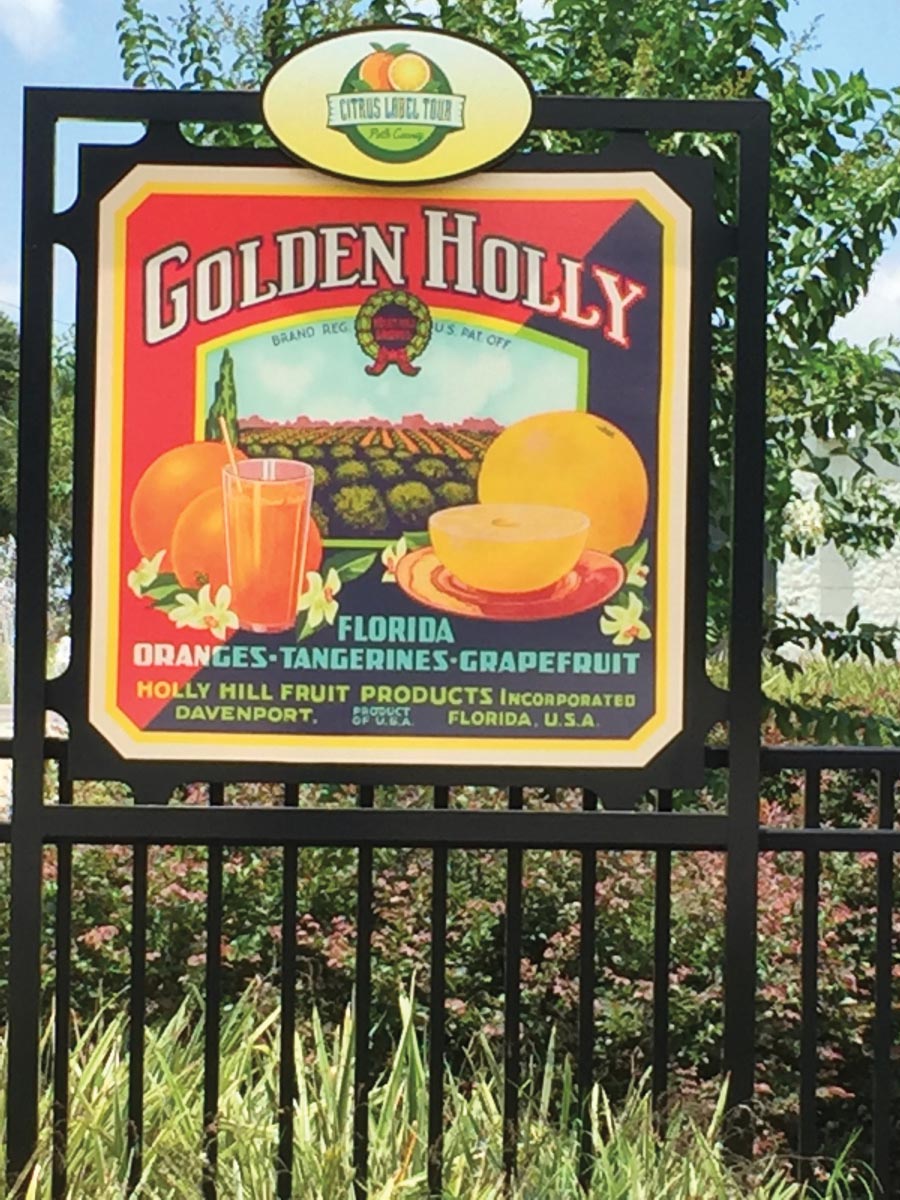
Fresh fruit from Florida was once shipped to Northern markets in wooden crates marked with labels intended to gain buyers’ attention – and to distinguish the offerings of one packing house over another. Used from the early 1900s through World War II, these artistic labels featured renderings of sunshine, palm trees and other iconic Florida imagery.

“I’ve always called them ‘Florida’s First Billboards’ because they depicted sites people think of when thinking of Florida,” says Brenda Eubanks Burnette, executive director of the Florida Citrus Hall of Fame and co-author of two books on the labels’ history. A new driving experience, the Polk County History and Heritage Trail’s Citrus Label Tour, directs visitors to 23 sites throughout Polk County, which was once the leading citrus county in the U.S. Almost 50 labels have been reproduced on signage at the sites.
See more: Florida Citrus Maintains the Juice
One of these, Peace River Packing Company in Fort Meade, has been part of the citrus industry for more than 90 years. General Manager Larry Black’s great-grandfather and other growers founded Peace River Packing Company as a cooperative in 1928. Since the 1950s, Black’s extended family has owned and managed the cooperative. Today, the company employs about 135 people in peak season and packs around 400,000 cartons of fresh fruit from its 3,200 acres of citrus trees and from a few nonmember growers.

The “Romance” blue label at this site depicts a young woman in a bathing suit preparing to dive into the Peace River, according to Black, who himself owns a collection of labels. “Those labels meant something to the buyers,” he explains. “Blue was always U.S. #1 or grade ‘A.’ Red was U.S. #2, and yellow or green was a ‘C’ grade of fruit, which primarily was sold only in Florida.”
Black says he supports efforts to preserve Central Florida’s citrus history. “It’s great to highlight the historical citrus marketing with today’s modern operations,” he says.
Burnette says the Citrus Label Tour, which has now expanded into Manatee, Indian River and Lake counties, serves double duty both as public art and history lessons. “After World War II, the industry went to cardboard boxes instead of crates for shipping, so those labels weren’t used anymore,” Brunette says. “We are trying to preserve that bit of history in the state’s most important agricultural crop.”
To start a program in your area, contact Brenda Eubanks Burnette at (561) 351-4314 or bburne1003@aol.com.