Virginia’s Horse Industry Harnesses Hard Work and Luck for Success

In partnership with: Virginia Department of Agriculture and Consumer Services
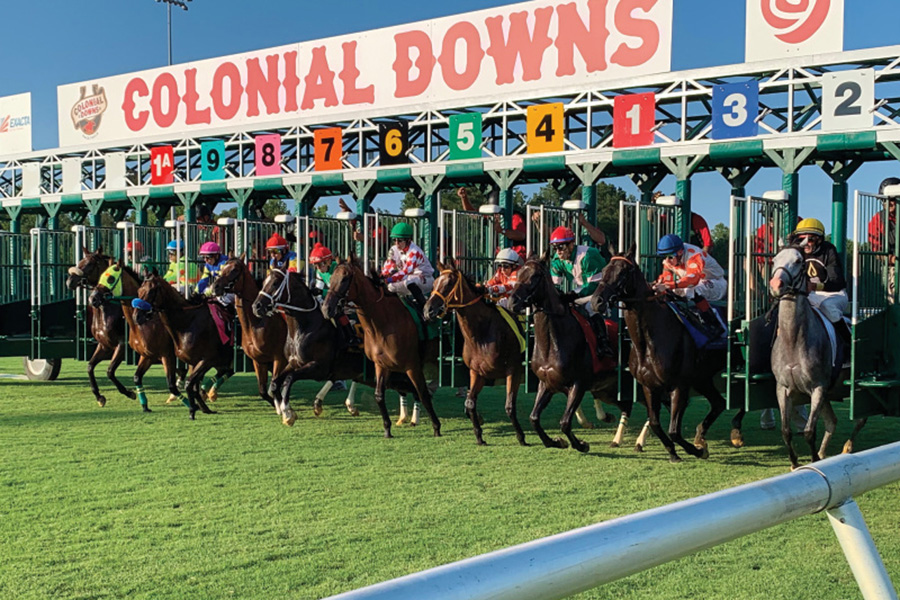
The history of horse racing in Virginia goes back for centuries, even before the United States was formed, and the horse industry continues to be a prominent part of the state’s agriculture scene.
“George Washington was a particular lover of horses and their humane treatment, threatening his artillery horse handlers with punishment if they were found treating the horses in a less than humane fashion,” says Dedi Spradlin, president of the Virginia Horse Council.
Getting Back on Track
The Virginia Horse Council is the umbrella organization representing the horse industry within the state. One of the council’s functions is to support legislation that elevates the equine and horse racing industries.
Colonial Downs opened a racetrack in 1997 in New Kent County. The track hosted thoroughbred racing through the 2013 season and harness racing through 2014, when the original owners of the track went out of business. Many in the industry thought Colonial Downs was gone for good. As a result, the Virginia Equine Alliance, comprised of various state equestrian groups, was formed to keep the racing industry alive. The group’s mission is to sustain, promote and expand horse racing and horse breeding industries in the Commonwealth.
Programs like breeding incentive initiatives, developing a network of OTBs (off-track betting) and securing advance deposit wagering partners were implemented. Through these efforts, new owners purchased Colonial Downs, opened a network of historical horse racing gaming emporiums and reopened the track in 2019.
“They’re doing great business now, and the industry obviously gets a piece of every dollar wagered,” says Darrell Wood with the Virginia Equine Alliance. “It’s definitely measuring up nicely to have a good future.”
See more: Discover the Best of Virginia Through Its Agritourism Trails
An Impactful Industry

In 2019, the Virginia Equine Alliance conducted a study on the economic impact of the Virginia horse racing and breeding industry, and it discovered some remarkable findings. According to the study, horse racing-related gaming operations generated $224.6 million in 2019 alone. That year, the overall economic impact of Virginia’s horse racing and breeding industry reached $542.1 million.
The study also reported that the horse racing industry is made up of more than 5,000 people.
“These jobs include those directly related to horses, like training and veterinary, farrier and dental services, and indirect jobs – barn construction, fencing, event sites, feed and hay services, as well as many others,” Spradlin says. “There are a variety of elements needed to hold a successful race event.”
Another way the horse racing industry is having an economic impact on the state is through the Virginia Thoroughbred Association’s Certified Residency Program. The program certifies horses bred out of state but raised in Virginia for a minimum of six months.
“Seven hundred horses a year come into Virginia for that six-month minimum time, and that’s fueled a lot of farm economies,” Wood says. “It’s saved farms that, when Colonial Downs went out of business initially, were on the brink of maybe going out of business, and now farms are filled across the state with these certified horses.”
Equine Energy

If you haven’t attended a horse racing event, it is worth seeing.
“Race day has something for everyone,” Spradlin says. “Horse races are full of energy, strength, hopes, dreams, hard work and luck.”
At a typical racing event, gates open an hour before the race. There are nine to 10 races each day with 30 minutes between each race. The horses parade in front of the grandstand before the event so visitors can have an excellent view of the contestants. Then you can go to the betting windows to place a bet and cheer your horse on to win.
“Everyone there is trying to bet on the winner, whether you’re CEO of a company or a person who just got off the midnight shift putting parts on a car in a factory, you’re both there together and can have the same conversations,” Wood says. “It’s a great way to see people of all walks of life together.”