North Carolina Growers Spice Up the Local Food Scene With Hot Peppers

This article first appeared in North Carolina Field & Family.
If you’re partial to foods that deliver a hint (or a whole lot) of spice, you’re in luck. Hot peppers are a specialty crop for North Carolina farmers, and they grow several types of them across the state.
“Jalapeños, habaneros, banana and cayenne peppers probably make up the bulk of the ones produced in North Carolina,” says Dr. William Terry Kelley, Henderson County Extension director for North Carolina Cooperative Extension. “However, there is also some production of ghost peppers and Carolina Reaper, among others. Carolina Reaper is considered the hottest of the commercially produced peppers. The different pepper types have different levels of heat. There are also some flavor differences among them, which give them unique uses.”
See more: 15 Flavorful Pepper Recipes to Try This Summer

A Pepper for Every Palate
In Raleigh, Ronnie and Stephanie Moore own Ronnie Moore’s Fruits and Veggies, and they grow between 50 and 60 varieties of super hot peppers every year. They’ve been growing hot peppers for eight years and add new varieties every year.
“I enjoy growing peppers for my customers and the products they make,” Stephanie Moore says. “It’s always rewarding when someone brings us a jar of the sauce or rub they have created with our hot peppers.”
The Moores supply all the super hot peppers for Julz’s Creations LLC, a woman-owned business based in Durham that creates small batch, artisan hot sauces, pickles, mustard and barbecue sauce using North Carolina grown produce. The super hot peppers Julz’s Creations buys from the Moores include the ghost, Carolina Reaper, Scotch bonnet, Naga Viper, habanero, 7 Pot, scorpion, Bhut Orange Copenhagen and more.

Some Like It Hot
“Julie [from Julz’s Creations] saw us one day at the market and said she knew she had found her special place,” Moore says. “Super hot peppers are hard to come by unless you have a large-scale hookup or if you want to pay a ton online for small quantities.”
Since hot peppers can take four to six weeks to germinate, North Carolina growers typically plant them in greenhouses in January or February.
“Germination is slow and can be difficult with the super hot peppers. The trick is keeping them at 80 to 90 degrees, which can be challenging even with the greenhouse,” Moore says. “But once we have established plants, they thrive off North Carolina’s hot, humid summers. They have a really long growing season, so we usually don’t start harvesting the super hot peppers until late July or early August. They usually produce for us until November.”
See more: North Carolina Specialty Crops Support Small Farmers
Kelley says locally grown peppers start becoming available for consumers in Eastern North Carolina in May or June, and in Western North Carolina they become available in July and August.
“Picking usually occurs until frost,” he says. “Most people should be able to find locally grown peppers at neighborhood farmers markets and produce stands. Some North Carolina-grown peppers may also be available in some supermarkets. The supermarkets will usually have these peppers year round, but they are not locally produced in many cases.”

Turn Up the Heat
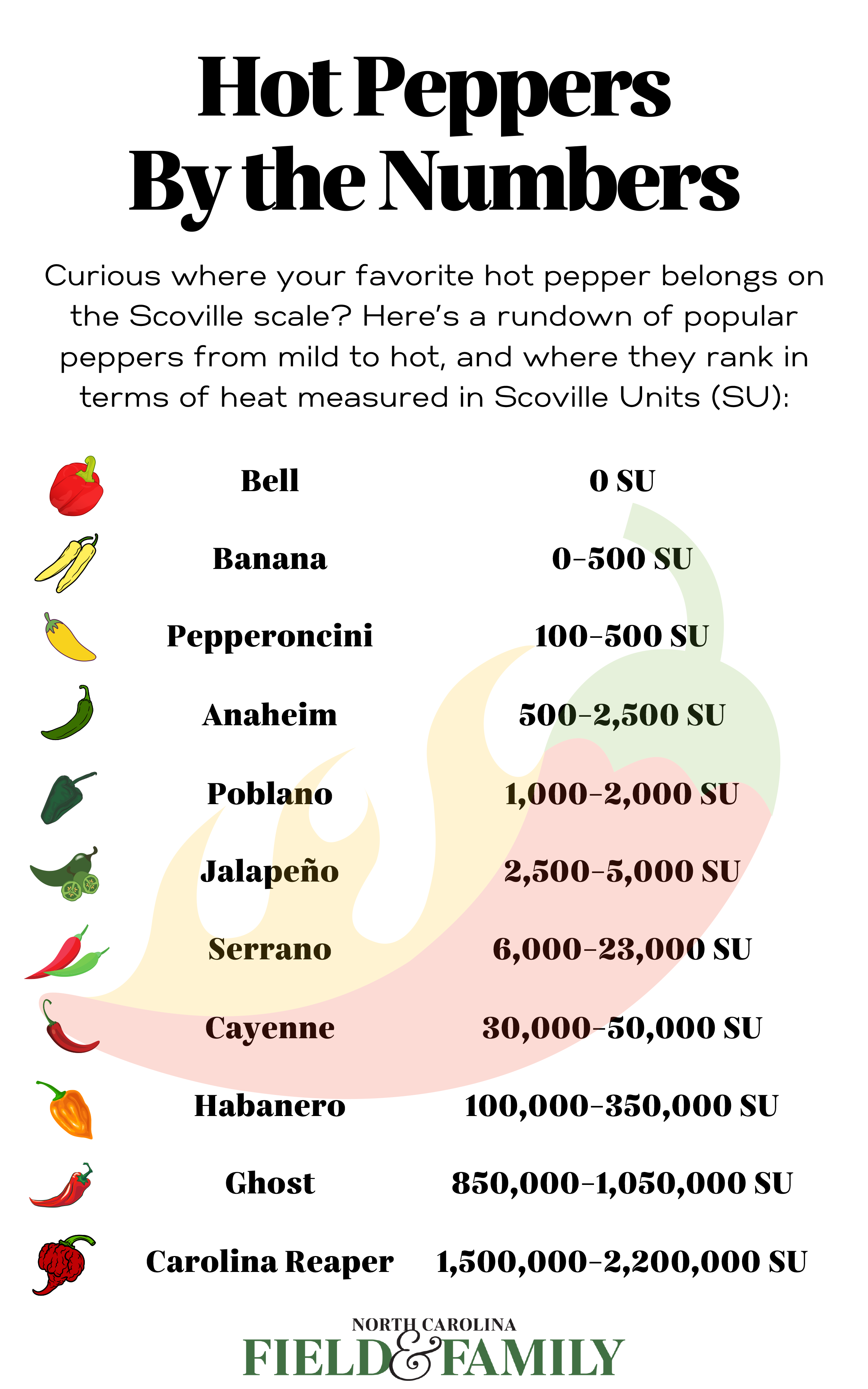
Folks in the hot pepper industry measure a pepper’s level of pungency, or hotness, with the Scoville Scale. It was named for Wilbur Scoville, a pharmacist who developed the original method in 1912.
“The Scoville Scale measures the concentration of capsaicinoids in the fruit,” Kelley says. “The most common of these is capsaicin, which is the main component that generates the pungency of the fruit.”
At Ronnie Moore’s Fruits and Veggies, the capsaicin is so high in many of their hot peppers that they have minimal to no problems with pests or fungal issues. That means the Moores typically don’t have to use chemicals or pesticides on them.
“They are basically an organic plant,” Moore says. “The flavor is truly amazing, and it really makes a difference in a food’s flavor when they are used correctly. Some can be extremely hot.”
See more: How North Carolina Organizations Are Reducing Food Waste
Moore considers anything that ranks more than 100,000 Scoville Units (SU) on the Scoville Scale “too hot to eat fresh” and only uses a sliver of most of them in cooking. She also uses them in vinegar- and tomato-based sauces as well as dry rubs that have a mixture of heat levels with some garlic and sea salt to balance out the intensity of the peppers.
“I recommend to all our new customers to start slow and low on the heat levels and gradually build your heat tolerance up,” Moore says. “Because if a jalapeño is too hot for a consumer, then eating some of the hotter peppers could cause medical problems if their body is not used to the amount of capsaicin in some of them.”

Pick a Peck of Peppers
The Moores sell their hot peppers at the North Carolina State Farmers Market in Raleigh, and they have many return customers year after year.
“We have had people fly in from as far north as Philadelphia and as far south as Florida to purchase our super hots, and many locals buy them and tell me they ship to family members across the U.S.,” Moore says. “Knowing a part of our farm is in so many places and makes people happy makes us happy.”
Super hot peppers produce a plethora of different sizes, shapes and colors.
“They are truly eye-catching for anyone coming to our business at the farmers market,” Moore says. “Each variety is so unique.”
To learn more about Moore’s Produce, visit eatmooreproduce.com.